
How a Tech Entrepreneur Used AI and mRNA Science to Save His Dog: A Breakthrough in Personalized Cancer Treatment
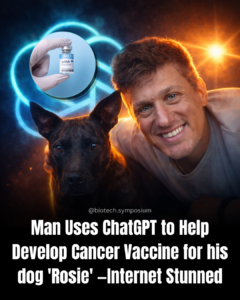
When Sydney-based technology entrepreneur Paul Conyngham learned that his eight-year-old rescue dog, Rosie, had been diagnosed with an aggressive form of mast cell cancer, the prognosis was devastating. Veterinarians estimated she had only a few months to live. Although chemotherapy was initiated to slow disease progression, it proved insufficient in reducing the size of the tumors. Faced with limited options, Conyngham chose an unconventional path—one that combined artificial intelligence, genomics, and experimental immunotherapy.
Despite having no formal background in medicine, Conyngham leveraged his engineering expertise and curiosity to explore alternative solutions. He turned to modern AI tools, including conversational systems and computational biology platforms, to better understand emerging cancer treatments. During this exploration, he encountered the concept of personalized mRNA cancer vaccines—a rapidly evolving area in biomedical science that aims to tailor treatments based on an individual’s unique genetic mutations.

Determined to pursue this approach, Conyngham arranged for both Rosie’s healthy and tumor DNA to be sequenced at the University of New South Wales. This step was critical in identifying the specific mutations responsible for driving her cancer. Using advanced computational tools, including protein-structure prediction systems such as AlphaFold, he analyzed how these mutations altered cellular behavior and contributed to tumor growth.
Armed with this data, Conyngham collaborated with leading Australian scientists to design a custom mRNA vaccine. The goal was to train Rosie’s immune system to recognize and attack cancer cells by targeting the unique molecular signatures identified in her tumor. However, translating this concept into treatment was not straightforward. Regulatory and ethical approvals posed significant challenges, and it took several months to secure authorization for administering such an experimental therapy.

Eventually, a veterinary researcher with the appropriate ethical clearance agreed to oversee the treatment. Rosie received her first vaccine dose in December 2025. Remarkably, within a week, visible reductions in tumor size were observed. By the following month, her condition had improved dramatically—she regained energy, mobility, and even resumed playful activities, including jumping fences at a dog park.
Overall, the personalized vaccine was reported to have reduced approximately 75% of the cancer burden. Researchers involved in the case described it as a pioneering achievement—the first instance of a fully personalized mRNA cancer vaccine developed for a canine patient. The success of this approach has sparked interest in its broader applications, particularly in human oncology, where similar strategies are already under investigation.
Encouraged by the results, Conyngham is now working with scientists to develop a second-generation vaccine aimed at targeting the remaining tumors that did not respond to the initial treatment. This ongoing effort highlights not only the potential of personalized medicine but also the growing role of interdisciplinary collaboration between technology and life sciences.

Rosie’s story underscores a transformative shift in how complex diseases like cancer may be treated in the future. By integrating artificial intelligence, genomic sequencing, and immunotherapy, it demonstrates the possibility of highly individualized treatments that go beyond traditional, one-size-fits-all approaches.